Katrine Borup

Vester Søgade 58, 3.th
1601 København V — Denmark

+45 53 34 83 89
katborup@gmail.com

Danish Back

STOF TIL EFTERTANKE (2023)

A simple principle and a familiar form, the FABRIC ROLL, have formed the basis for the installation “STOF TIL EFTERTANKE” in Dina Vejling’s exhibition space RUMMET. The gallery’s location in the old Brandts Klædefabrik has guided the choice of materials and concept.

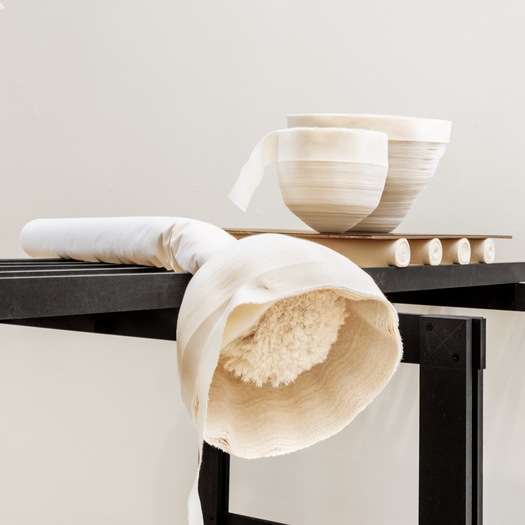
“STOF TIL EFTERTANKE” is a series of objects made from long strips of unbleached sheet canvas that have been rolled up. Along the way, the fabric has been worked on in various ways. This has given the fabric rolls atypical shapes – some are “mutated” to such an extent that they are barely recognizable as fabric rolls.

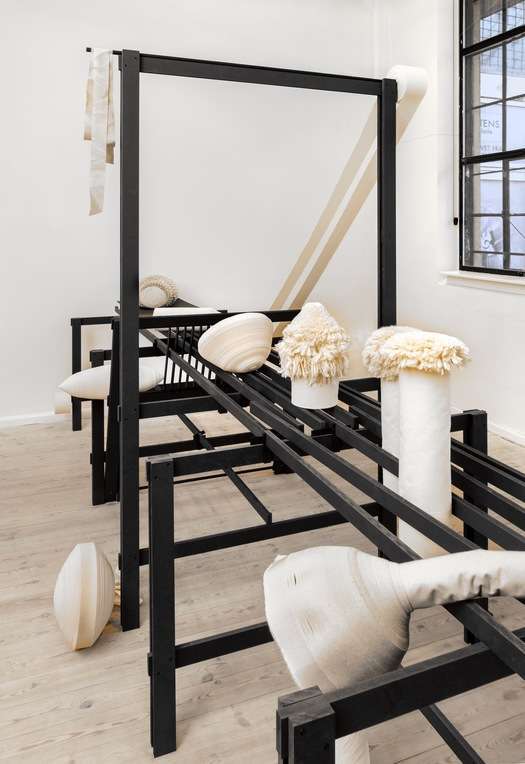
“STOF TIL EFTERTANKE” is a kind of systematic basic research. In classic artisanal style, I have investigated the fabric’s own “nature” within the framework of the fabric roll concept. But the project also has a narrative layer. The black wooden structure, which functions as a kind of podium for the fabric rolls, plays with the history of the exhibition site (like a shadow from the past) and provides reminders of the large machines that previously “lived” in the factory.

“STOF TIL EFTERTANKE” can also be seen as a kind of vision of the future: Many of the “mutated” fabric rolls have nature references, and during the work on the overall installation, Chernobyl and the Swedish car cemetery at Ryd have been important sources of inspiration. Nature that grows over culture. Development rolls…..
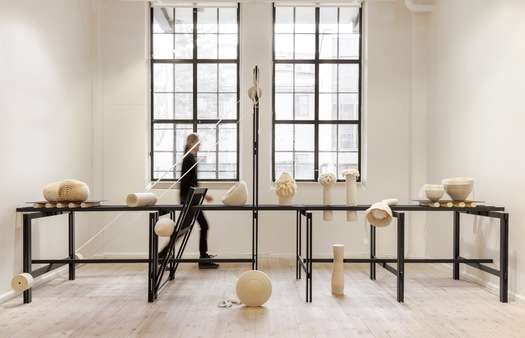
Fabric(k), den samlede installation
Col xl stofttileftertanke installation

STOF TIL EFTERTANKE

The installation in the old clothing factory
Photo: Ole Akhøj

The “mutated” fabric rolls are placed in a black wooden structure, which in addition to relating specifically to the RUMMET’s distinctive windows has references to a classic shaft loom but also to a modern conveyor belt. The structure spans across the exhibition space and plays with the notion of continuing on the other side of the room’s walls as a reminder of the large open spaces in the former Brandts Klædefabrik.

Fabric(k), frynser
Col xl stofttileftertanke kortefrynser

STOF TIL EFTERTANKE

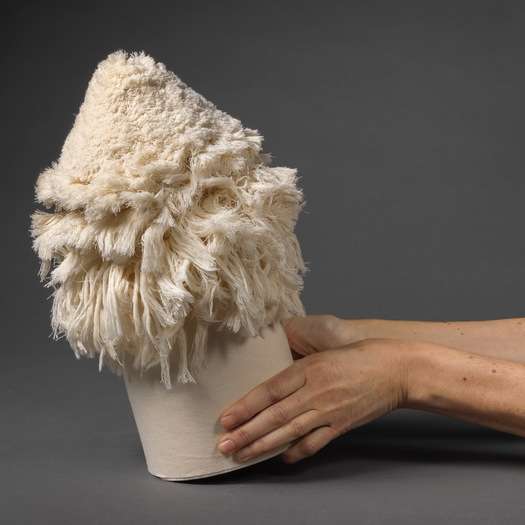
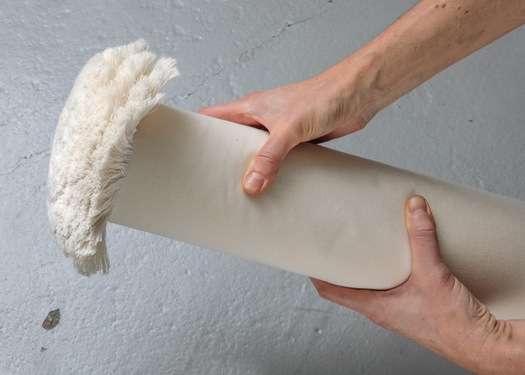
Roll with short (self-supporting) fringes, 5 cm long
Unbleached sheet canvas
Dimensions: h:54cm, ø:11(roll)/20cm
Photo: Ole Akhøj

Col xl stofttileftertanke langefrynsermedh nder

STOF TIL EFTERTANKE

Roll with fringes of varying length (the fabric strip is also made narrower during the rolling up)
Unbleached sheet canvas
Dimensions: h:38cm, ø:14(roll)/23 cm
Photo: Ole Akhøj

In three rolls, I worked with unraveling, and I studied how different fringe lengths behave. Long fringes tend to clump together, unlike short ones, where the threads stay separate. Short fringes are also self-supporting, giving them a spiky look; long fringes are so heavy that they hang.

Fabric(k), installationsudsnit (kokon)
Col xl stofttileftertanke installationsudsnit

STOF TIL EFTERTANKE

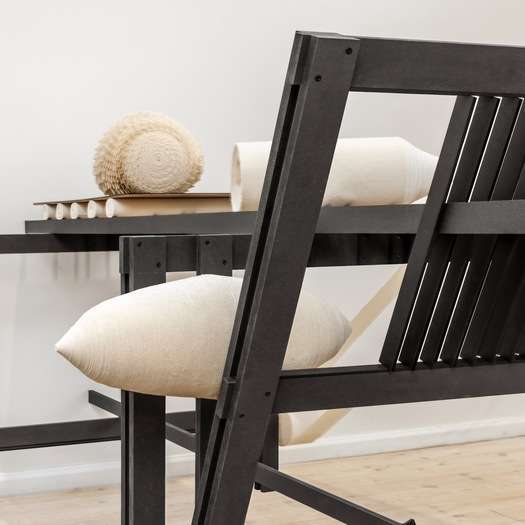
Excerpt from the complete installation
Black MDF and unbleached sheet canvas
Photo: Ole Akhøj

Col xl stofttileftertanke kokoniv v

STOF TIL EFTERTANKE

Excerpt from the complete installation
Black MDF and unbleached sheet canvas
Photo: Ole Akhøj

The cocoon-like roll of fabric (l: 50cm, ø: 20cm) in the picture above was created based on a previously agreed principle: The width of the fabric is made one thread narrower on each side for each round of winding. Later two threads, then three threads and finally four threads on each side for each round. Another roll of fabric (placed in the middle on the floor in the picture of the entire installation) was created based on a similar principle: The width of the fabric is made one thread narrower every one and a half meters. The shape of the rolls of fabric is “random” in the sense that they are the result of a production recipe.

Fabric(k), bølgekant
Col xl stofttileftertanke b lgekant

STOF TIL EFTERTANKE

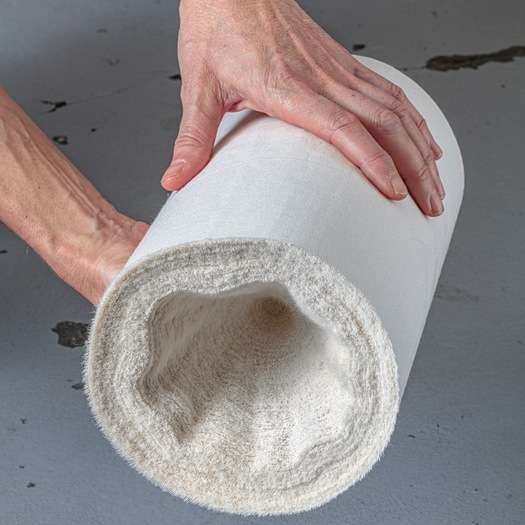
The wavy edge is the result of the fabric being rolled up crookedly
Unbleached sheet canvas
Dimensions: l:44cm, ø:15cm
Photo: Ole Akhøj

In a crookedly rolled “mutant”, the thin weight thickness at one end of the roll means that the fabric layers here contract slightly, so that the edge waves decoratively – a completely unexpected gift and a result of the fabric’s own “will”. The fabric web also has two different edge types, a torn one, which gives a velour-like soft surface and a cut one, which gives a smooth surface.

Fabric(k), blomst, skåle og plisseret
Col xl stofttileftertanke blomstsk le

STOF TIL EFTERTANKE

Unbleached sheet canvas

Col xl stofttileftertanke plisse1

STOF TIL EFTERTANKE

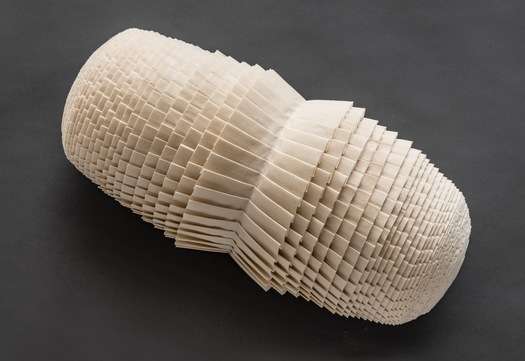
Unbleached sheet canvas, pleated/pleated (fabric width is cut narrower during rolling)
Dimensions: h:54cm, ø:23cm
Photo: Ole Akhøj

Col xl stofttileftertanke plisse2

STOF TIL EFTERTANKE

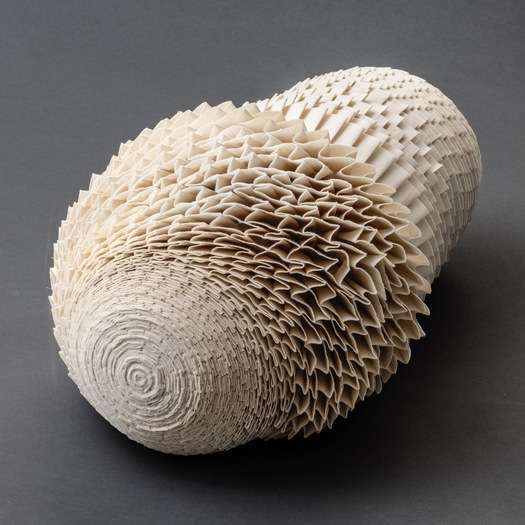
Unbleached sheet canvas, pleated/pleated (fabric width is cut narrower during rolling)
Dimensions: h:54cm, ø:23cm
Photo: Ole Akhøj